
Posts Tagged “selina”
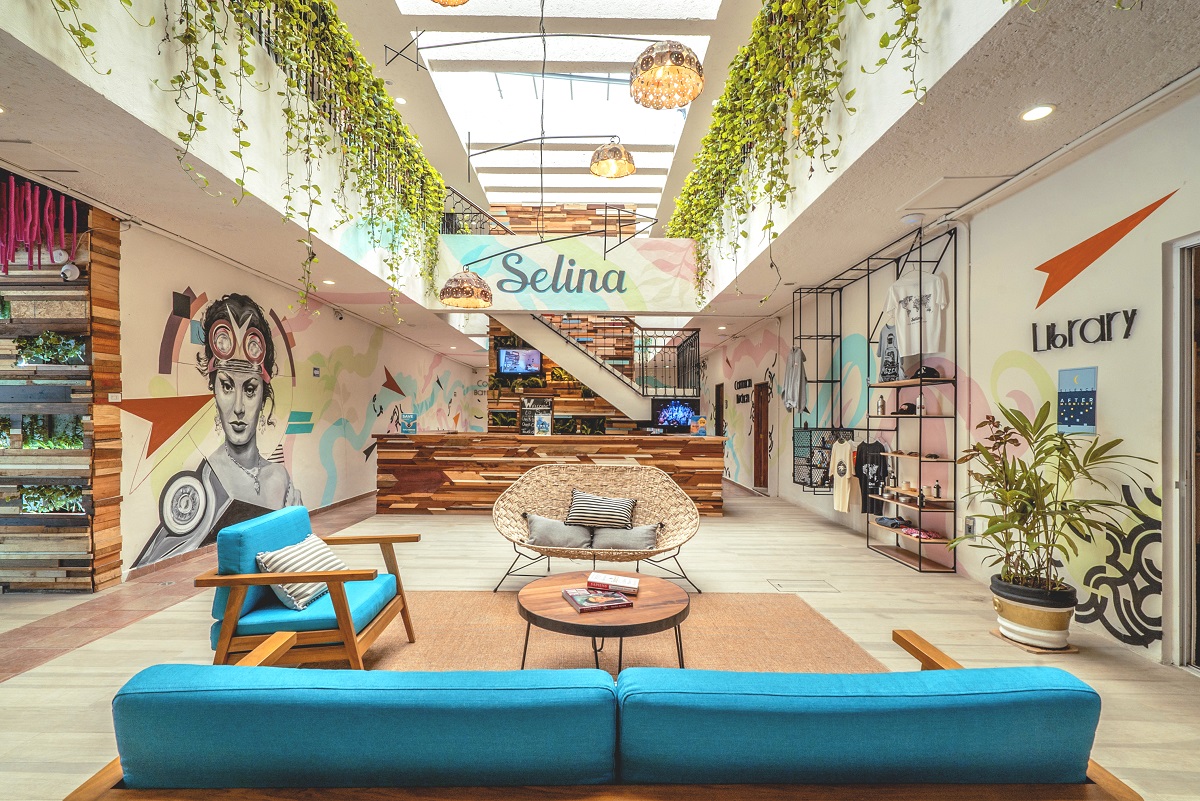
Last month I dedicated one of my posts to the supporting startup ecosystem, the way in which the whole concept of both the office and the home are becoming blurred by rethinking what it means to do both, and what we really want from both if we just knew. In some ways, these innovations are mirroring their virtual social counterparts but Israeli startup Selina is taking work and play one step further by redefining both, especially as it applies to the digital nomad, a loner who designed things that way out of what they deemed a necessity.
To learn more, the following excerpt on Selina, originally posted by NoCamels.com, follows.
Hospitality Startup Selina Redefines Work And Play For Digital Nomads
It sounds like the Israeli entrepreneur’s ultimate dream. Two young, post-army Israelis meet while traveling and surfing in Central America, strike up a friendship, identify an opportunity, and launch a startup. That startup then becomes a company landing multi-million dollar investments and inaugurating multiple locations across the world.
This is the history-in-brief of Selina, the emerging co-working and traveling hospitality service founded by Daniel Rudasevski and Rafael Museri in 2012. Last month, the company raised $95 million in a funding round led by the Dubai investment firm Abraaj Group, with the participation of fellow Israeli Adam Neumann, the co-founder and CEO of coworking space giant WeWork.
Selina places a strong emphasis on the “holistic hospitality” experience, Chief Operating Officer Liat Aaronson tells NoCamels, tapping into nomadic lifestyles, the gig economy, and the “4-hour work week,” a concept forwarded by the wildly popular 2007 book by the same name. The book promotes work and travel, and a move away from the 9-5 grind.
Selina combines affordable accommodation, co-working spaces, fine dining, wellness, volunteering initiatives, entertainment, travel and adventure across 23 urban, beach, mountain and jungle destinations in nine countries in Latin America, Central America and the Caribbean, currently.
But it also goes above and beyond. Guests connect with other like-minded, working (or non-working) nomads for a real sense of community, she explains.
It’s not a hotel chain, where guests are often exposed to the same experience, services, and aesthetics no matter what country they are in, Aaronson says. “We provide a reference to the local environment across our destinations while keeping our inherent culture and ethos,” she says.
Selina’s model is rooted in real estate development, which is how Rudasevski and Museri got started. The two met through a mutual friend in Costa Rica in the early aughts and soon began working on a shared vision to develop land, founding Dekel Holdings, their property management company.
Known for its natural beauty and still underexposed to tourists, the town became a source of inspiration – and a base of operations – for the pair, and with the help of family and friends, they soon began purchasing and managing properties in and around Pedasi. These included an “eco-lodge, the first large-scale shopping center, another giant resort community, a bakery, the hotel, a coffee shop and a wine bar” by 2013, according to the Forward report.
While developing the town and having built a tight-knit social circle with locals and travelers, including many Israelis, Museri and Rudasevski realized they were onto something. In 2014, the first Selina destination was set up in Venao, a surf town near Pedasi, and the rapid expansion soon began.
Twenty-three locations later, Selina is set to open its first US location in Miami by September, with New York and Los Angeles following closely. With Israeli roots, the company is also looking at a destination in Tel Aviv by the end of the year. Locations in Poland, Portugal, Germany, Greece, Hungary, and Spain, are also planned.
In North America and Europe, Selina will be branching out more prominently into urban areas, where it will have to compete with local offerings. But the company remains confident.
Aaronson tells NoCamels that while “there may be no surfing lessons in Berlin, for example,” Selina will offer different services, drawing on what was learned in Central and South America and applying it to its future spots.
The menu may change and the style may be different, but Selina will keep some its staples while localizing its offering, she says.
Each Selina location is modeled around three key pillars, the company says: “Nomad, which includes unique accommodations, coworking and communal spaces like wellness centers and cinemas; Explore, an inter-property travel concierge and tour operator that connects guests with the best experiences in each location; and Playground, each location’s unique on-site programming from food and beverage concepts, concerts and art shows to workshops and conferences.”
Another area that differentiates Selina from others is the price. Through a “uniquely democratic approach to accommodation,” Selina’s offerings range from $10 dorms, hammocks or camping areas “for the more adventurous traveler,” to $300 luxury suites “for the more indulgent.”
Selina’s business model is also unique, and “is engineered for rapid growth,” the company says. After identifying locations, the transition to a Selina spot takes between three and four months. “It’s an asset-light development method that is an absolute game-changer for local communities, new staff, and guests alike,” Selina says.
And Selina appears to have some true believers.
Will Selina’s business model work? Well, they have $95 million in investment saying we think so. What’s most interesting to me is that no one, as far as I know, has looked at the loan wolf as a market niche wrapped around a passion for creativity most often, but not always, manifested as new companies or inventions. It’ll certainly be interesting to see what happens, both from a business model and anthropological perspectives. I don’t think anything quite like this has ever been done before. Will offering antisocial types a way to network, collaborate and create discover heretofore synergies or will it prove that these digital nomads are the way they are for a reason?

Diane Israel is a Chicago native and long-time supporter and advocate of the American Israel Public Affairs Committee (AIPAC). She is also famous for her culinary recipes. Diane can be reached at Diane@IsraelOnIsrael.com