
Archive For The “Israeli Tech” Category

Israeli startup SpaceIL, a competitor within the prestigious the satellite X Prize competition, declared via the Israel region Industries (IAI), that it’s about to launch Israel’s initial space vehicle to the moon in Dec 2018, with an expected landing on Feb 13, 2019.
“We have a launch and landing dates! Dec 2018- Launch, Feb thirteen 2019- initial Israeli space vehicle lands on the moon! SpaceIL’s moon mission is formally afoot,” SpaceIL tweeted.
The space vehicle is going to be transferred to the North American nation in Nov, before its actual launch in Dec.
See related article on artificial intelligence.
SpaceIL can launch its space vehicle on Elon Musk’s SpaceX Falcon nine via spacefaring industries. It will become independent from its two-stage launch rocket at a height of regarding thirty seven.3 miles higher than the planet when it will enter the elliptical orbit around the planet, then expand slowly till it’s captured by satellite gravity.
At a recent conference, SpaceIL’s corporate executive Ido Anteby was quoted as saying: “We can plant the Israeli flag on the moon.”
The space vehicle, dubbed the Sparrow, measures 5 feet (1.5 meters) tall with a diameter of roughly 5 feet and weighed some 330 pounds (150 kg) while not fuel and over 0.5 plenty (600 kg) with fuel.
SEE ALSO: Google’s $20M satellite XPrize Went unwanted, however, Israel’s SpaceIL Still Plans ‘Moonshot’If the mission is completed, Israel can become the fourth country — once the North American nation, Russia, and China — to finish a controlled satellite landing.
The initiative, besides the try be a part of a tiny low range of nations that have traveled to the moon, is additionally meant to extend interest in house and science among Israeli, significantly in younger generations, and encourage them to check in STEM (science, technology, engineering, and mathematics) fields.
The project began as a part of the satellite X competition, that came with a prize of $20 million. The March 31, 2018 point for the moonshot came and went with the prize going unwanted.
But the Israeli team had vowed to maneuver forward still.
Israel had been competitory against four alternative teams: Moon specific (USA), synergism Moon (an international collaboration of fifteen countries), TeamIndus (India) and HAKUTO (Japan) within the contest, that had concerned inserting a space vehicle on the moon’s surface, traveling five hundred meters on the moon, and transmission high-definition video and pictures back to Earth. The winner would have won $20 million and therefore the second-place team would have nabbed $5 million.

Diane Israel is a Chicago native and long-time supporter and advocate of the American Israel Public Affairs Committee (AIPAC). She is also famous for her culinary recipes. Diane can be reached at Diane@IsraelOnIsrael.com

Over the past decade, 3D technology has been employed in the style world to make innovative, subtle works of art that take a look at the boundaries of talent and imagination. Israeli designers, Danit Peleg and Noa Raviv, graduates of the distinguished Shenkar faculty of Engineering, style, and Art, created international headlines with their use of 3D printing for fashion. Peleg created the world’s 1st entirely 3D written fashion assortment, and Raviv, whose work has been displayed within the big apple Metropolitan deposit of Art, created a 3D print assortment by manipulating digital pictures modeling software system. Late last year, Israeli textile designer Eden Saadon used a 3D printing pen for a lacy underwear assortment.
Another Israeli designer, Nitzan Kish, has been attending 3D technical school to make unambiguously formed vesture and jewelry with a special purpose in mind – protection, specifically in urban environments. Her assortment, Me, Myself & I, 1st discharged in 2015, options clothes that grow to be spikes and appearance like fashionable body armor.
See related article on artificial intelligence.
“The question is why is there a requirement for armor within the public sphere. and therefore the answer is that there’s no different selection at the instant,” she tells NoCamels.
“Women square measure exposed to any or all sorts of things. Harassment, rape, assault. these days surveys show that a minimum of one in a pair of girls say they need been troubled, sexually or otherwise, publicly, however we have a tendency to all grasp it’s possible over that,” she says, adding that the discussion close the difficulty, partially generated by the #MeToo movement, could be a huge accomplishment.
In Israel, one in each 3 girls suffers a sex crime throughout her period, and one in each seven girls is raped, per the Association of Rape Crisis Centers in Israel. In the US, one out of each six yankee girls has been the victim of a rape or tried rape in her period, per RAINN (Rape, Abuse & unlawful carnal knowledge National Network).
“It’s vital to speak concerning this stuff and to own the language, to make amendment,” she says.
Her items square measure so a conversation-starter. The vesture interlocks at the body and moves swimmingly with the body, nevertheless upon any physical force, the garment changes form and becomes a protection mechanism.
Kish speaks concerning protection and assault from personal expertise. Trained in martial art and martial art from a young age, she had her own painful expertise whereas a student at Jerusalem’s Bezalel Academy of Arts and style in her final year and within the interior of her final project. The incident crystal rectifier her to assume more concerning such protection vesture.
“I was on a bus at some point jam-choked with folks, in the main students, and a person started threatening Pine Tree State, he didn’t bit Pine Tree State however he was terribly shut and extremely hostile, and despite my coaching [in martial arts] I froze, I simply froze and couldn’t move,” she recounts. Kish says it took the intervention of somebody else to create her snap out of the state she was in.
The second time the same incident happened, Kish says she had already finished her assortment and happened to own one in every of the clothes along with her and he or she says it gave her the strength to retort. “This man tried to the touch Pine Tree State and that i simply felt authorized , I ran to the busman WHO stopped the vehicle and referred to as the police. Meanwhile, the person on the loose however I didn’t freeze, I did one thing,” she says.
SEE ALSO: Israeli Textile Designer Reshapes Fashion technical school With 3D Pen for teenagers
Kish calls attention to the 3D styles for different reasons too – they’re efficient, environmentally friendly and creates a heavy buzz within the fashion world she wasn’t expecting, she tells NoCamels. “What’s very cool concerning the 3D style isn’t solely that the materials square measure ninety % less damaging within the processes of development, however, my material is additionally fifty percent recycled,” Kish says.
“What’s fascinating concerning the technology and therefore the plan behind it’s that folks square measure curious to be told a lot of as a result of they haven’t seen one thing like this before,” Kish tells NoCamels, adding that the technical school ought to be created a lot of accessible.
Kish maintains an area at Impact Labs in an urban center, a first-of-its-kind one,000 sq. meter hardware innovation center launched last year by the Reut cluster in partnership with shared space large WeWork. Impact Labs provides entrepreneurs, companies, and social innovators with access to progressive hardware and style tools, together with IoT and electronic labs, optical maser cutters, high-end 3D printing, photography and 3D scanning, metal and, robotics.
Kish will plenty of her work on Impact Labs, wherever she has access to the tools and style software system for her comes and has up to now created 3 completely different jewelry collections. Her jewelry, associate complex jumble of trendy and colorful shapes oriented in nylon, uses the 3D printing techniques to create jewelry abundant lighter than it might be if it were a product of gold, to Illustrate. Kish meets one-on-one along with her purchasers and customizes the 3D clothes and jewelry to suit their style, color, and texture.
She tells NoCamels that she is consulting with different innovators at Impact Labs for her next creation – “Wonder-Jewel,” a group of sensible jewelry that includes subtle sensors into the accessories.
“The ‘smart jewelry’ startup is empowering therein, let’s say, if one thing happens to a user fifty meters away, can|she will be able to} alert the sensing element on her jewellery and a sure member of her community will receive a mobile phone notification to gain the scene instantly,” says Kish, WHO adds that it might even be applied to the senior population, particularly those that live alone and might be vulnerable to falls.
SEE ALSO: the long run of Food? however New Israeli technical school might have you ever ingestion Meals created By A 3D Printer
The enhanced jewelry assortment is about to be out there for purchase in a few years, says Kish, WHO emphasizes that the concept of a period of time alert systems is reverberative with several.
She tells NoCamels that she is additionally engaged in a project that includes the garments and therefore the jewelry along however wouldn’t elaborate more.
Kish says that when years of teaching 3D printing techniques to students associated changing into a skilled within the field, the technology has given her the flexibility to experiment imaginatively with style and color in ways that she once couldn’t do victimization a lot of ancient techniques.
Diane Israel is a Chicago native and long-time supporter and advocate of the American Israel Public Affairs Committee (AIPAC). She is also famous for her culinary recipes. Diane can be reached at Diane@IsraelOnIsrael.com

Last month I dedicated one of my posts to the supporting startup ecosystem, the way in which the whole concept of both the office and the home are becoming blurred by rethinking what it means to do both, and what we really want from both if we just knew. In some ways, these innovations are mirroring their virtual social counterparts but Israeli startup Selina is taking work and play one step further by redefining both, especially as it applies to the digital nomad, a loner who designed things that way out of what they deemed a necessity.
To learn more, the following excerpt on Selina, originally posted by NoCamels.com, follows.
Hospitality Startup Selina Redefines Work And Play For Digital Nomads
It sounds like the Israeli entrepreneur’s ultimate dream. Two young, post-army Israelis meet while traveling and surfing in Central America, strike up a friendship, identify an opportunity, and launch a startup. That startup then becomes a company landing multi-million dollar investments and inaugurating multiple locations across the world.
This is the history-in-brief of Selina, the emerging co-working and traveling hospitality service founded by Daniel Rudasevski and Rafael Museri in 2012. Last month, the company raised $95 million in a funding round led by the Dubai investment firm Abraaj Group, with the participation of fellow Israeli Adam Neumann, the co-founder and CEO of coworking space giant WeWork.
Selina places a strong emphasis on the “holistic hospitality” experience, Chief Operating Officer Liat Aaronson tells NoCamels, tapping into nomadic lifestyles, the gig economy, and the “4-hour work week,” a concept forwarded by the wildly popular 2007 book by the same name. The book promotes work and travel, and a move away from the 9-5 grind.
Selina combines affordable accommodation, co-working spaces, fine dining, wellness, volunteering initiatives, entertainment, travel and adventure across 23 urban, beach, mountain and jungle destinations in nine countries in Latin America, Central America and the Caribbean, currently.
But it also goes above and beyond. Guests connect with other like-minded, working (or non-working) nomads for a real sense of community, she explains.
It’s not a hotel chain, where guests are often exposed to the same experience, services, and aesthetics no matter what country they are in, Aaronson says. “We provide a reference to the local environment across our destinations while keeping our inherent culture and ethos,” she says.
Selina’s model is rooted in real estate development, which is how Rudasevski and Museri got started. The two met through a mutual friend in Costa Rica in the early aughts and soon began working on a shared vision to develop land, founding Dekel Holdings, their property management company.
Known for its natural beauty and still underexposed to tourists, the town became a source of inspiration – and a base of operations – for the pair, and with the help of family and friends, they soon began purchasing and managing properties in and around Pedasi. These included an “eco-lodge, the first large-scale shopping center, another giant resort community, a bakery, the hotel, a coffee shop and a wine bar” by 2013, according to the Forward report.
While developing the town and having built a tight-knit social circle with locals and travelers, including many Israelis, Museri and Rudasevski realized they were onto something. In 2014, the first Selina destination was set up in Venao, a surf town near Pedasi, and the rapid expansion soon began.
Twenty-three locations later, Selina is set to open its first US location in Miami by September, with New York and Los Angeles following closely. With Israeli roots, the company is also looking at a destination in Tel Aviv by the end of the year. Locations in Poland, Portugal, Germany, Greece, Hungary, and Spain, are also planned.
In North America and Europe, Selina will be branching out more prominently into urban areas, where it will have to compete with local offerings. But the company remains confident.
Aaronson tells NoCamels that while “there may be no surfing lessons in Berlin, for example,” Selina will offer different services, drawing on what was learned in Central and South America and applying it to its future spots.
The menu may change and the style may be different, but Selina will keep some its staples while localizing its offering, she says.
Each Selina location is modeled around three key pillars, the company says: “Nomad, which includes unique accommodations, coworking and communal spaces like wellness centers and cinemas; Explore, an inter-property travel concierge and tour operator that connects guests with the best experiences in each location; and Playground, each location’s unique on-site programming from food and beverage concepts, concerts and art shows to workshops and conferences.”
Another area that differentiates Selina from others is the price. Through a “uniquely democratic approach to accommodation,” Selina’s offerings range from $10 dorms, hammocks or camping areas “for the more adventurous traveler,” to $300 luxury suites “for the more indulgent.”
Selina’s business model is also unique, and “is engineered for rapid growth,” the company says. After identifying locations, the transition to a Selina spot takes between three and four months. “It’s an asset-light development method that is an absolute game-changer for local communities, new staff, and guests alike,” Selina says.
And Selina appears to have some true believers.
Will Selina’s business model work? Well, they have $95 million in investment saying we think so. What’s most interesting to me is that no one, as far as I know, has looked at the loan wolf as a market niche wrapped around a passion for creativity most often, but not always, manifested as new companies or inventions. It’ll certainly be interesting to see what happens, both from a business model and anthropological perspectives. I don’t think anything quite like this has ever been done before. Will offering antisocial types a way to network, collaborate and create discover heretofore synergies or will it prove that these digital nomads are the way they are for a reason?
Diane Israel is a Chicago native and long-time supporter and advocate of the American Israel Public Affairs Committee (AIPAC). She is also famous for her culinary recipes. Diane can be reached at Diane@IsraelOnIsrael.com
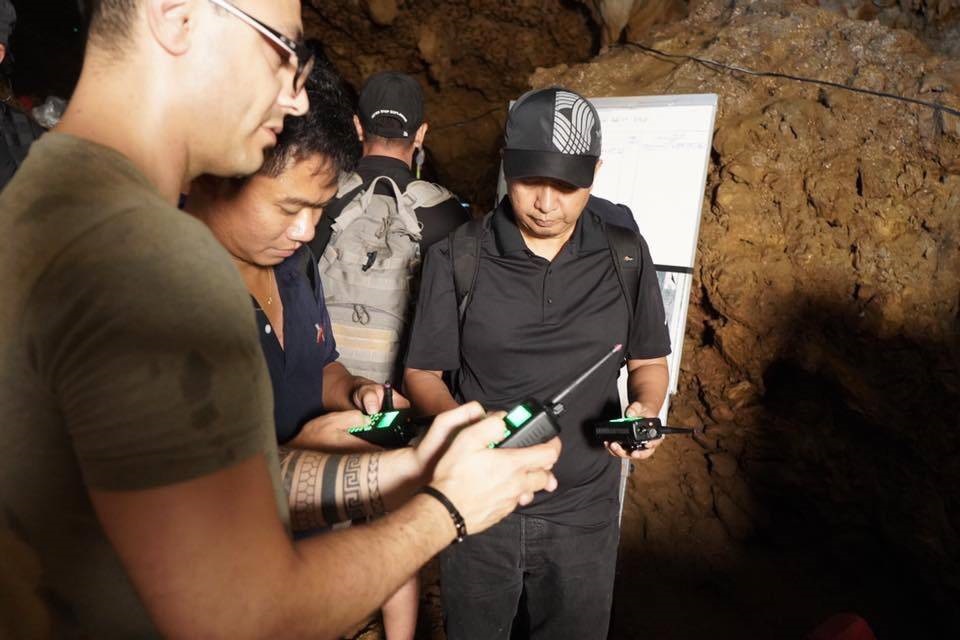
Nearly since the county’s inception in 1949, Israel has invested in search and rescue technology like few countries have. It comes as little surprise that Israel would play a critical role in the global effort to find and rescue the Tai boys and their coach who have been trapped in a Tai cave now for almost two weeks. One of the biggest challenges is communications. Unlike above ground terrain, radio waves do not travel well through rock, which is where Israel’s technology was petitioned to assist, namely through Maxtech network and its emergency communication equipment.
The following information was gleaned from NoCamels.com and other reporting sources.
Israeli rescuers are a part of a significant international operation to find a boys’ football game team missing since Midsummer Night in Thailand. On Monday, the team of twelve boys, ages eleven to sixteen, and their 25-year recent coach were found alive, cornered over the past 9 days during a part flooded settle the northern region of Chiang Rai.
The mission to extract the team from the cave is afoot. Thailand’s military aforesaid on Tuesday that it might take months to bring them to the surface because the region’s season begins and water levels rise. Authorities were making ready semipermanent food provides and were considering skin-dive lessons for the cornered team, in line with news reports.
The missing cluster was discovered by service division on a weekday, Chiang Rai governor Narongsak Osottanakorn aforesaid, yet as a British diving team. significant rains flooded key passageways to the areas the boys were believed to be cornered and rescue efforts are marred by inclement weather and dark tunnels that hit the Tham Luang Nang Non-cave once the boys disappeared, following their football game over a week ago.
See related story on New Security Measures for Food and Water.
Shortly once their disappearance, Thai emergency services began search efforts and were shortly joined by international specialists from China, Australia, the UK, Laos, Myanmar, the US, and Israel. over one,000 individuals are concerned within the operation.
The Israeli rescuers, among the primary to affix the scene simply 2 days once the boys disappeared, deployed Israeli-developed, progressive, search-and-rescue school to assist the efforts.
Israeli tech company Maxtech Networks, a provider of the emergency facility, sent emergency radios and different innovative technologies to assist the rescuers, together with their proprietary Max-Mesh mobile skilled radio, a tool that permits mission-critical communication of skilled mobile radios through virtual infrastructure, even once no physical infrastructure is accessible.
Maxtech CEO and founder Uzi Hanuni tell NoCamels that he was thus touched to assist within the rummage around for the missing cluster that the corporate provided the devices to the search parties as shortly because it might.
Yuval Zalmanov, presently a senior applied scientist at Maxtech, additionally voluntarily flew dead set Siam last weekday.
“We as an organization determined to contribute devices to avoid wasting those youngsters,” Hanuni says, “It’s terribly easy. once there area unit youngsters in danger, you don’t deliberate coming back from an area like Israel. It’s in our nature.”
After a 12-hour flight that was funded by Asaf Zmirly, Associate in Nursing Israeli national UN agency lives in Siam and owns a rescue company, Zalmanov joined him within the mission. He took radios and computers with him to offer dead set the rescue groups on the bottom and schooled them a way to use it, however, was additionally readily available to produce technical support. Hanuni says he’s in-tuned with Zalmanov often.
Hanuni aforesaid his team was the sole one to introduce operating technology into the rescue efforts because the sophisticated nature of the realm – concerning ten kilometers massive – isn’t contributory to communication.
“We understood that the sole manner for those rescue forces to enter this cave is mistreatment resilient and smart communication that may survive these powerful surroundings,” he additionally Associates in Nursing Israeli TV station in Associate in a Nursing interview Sunday. The cluster currently has to be extracted from the cave safely, with water continued to rise and dust obstruction access. the present arrange is to induce medical treatment and food to the party.
“We can drain all water out from the cave then we are going to take all thirteen individuals out of the cave. we have a tendency to area unit currently coming up with a way to send nurse and doctor within the cave to visualize their health and movement. we are going to work all night,” Osottanakorn aforesaid.
Hanuni says he was heartened to listen to the cluster was placed. “I am terribly excited by this wonderful success combining technology and life-saving. it’s worked.”
The easy lay mesh skilled mobile radio, that might simply be mistaken for a link, is far additional advanced than the common transportable, hand-held, two-way radio transceiver. It uses a complicated package formula developed by Maxtech over the past twelve years, with technology that permits the user to speak and use the device as a relay at the same time, on the far side typical network reach. (Relay technology is once the device is activated by a current or signal in one circuit that opens or closes another circuit, they will persuade the system and listen to sounds or noises within the closed areas at an equivalent time.)
The school is ready to produce safe communication in voice and video with none line of sight or any physical infrastructure. The range, Hanuni tells NoCamels, isn’t endless, however, it’s a minimum of a couple of kilometers deep.
Hanuni says the school has already been employed by Israel, Italy, and India, within the part, defense and security spheres.
Israel’s search-and-rescue efforts
Israel has long been at the forefront of stylish search-and-rescue technology and its responder’s area unit among the primary to possess boots on the bottom once disasters occur.
Israeli medical responders and rescue groups have additionally come back to rely upon groundbreaking school solutions to assist them in their relief efforts, mistreatment solutions like advanced bandages, robots, and drones to find victims or sensors that give visual aid in places that can’t be seen by the oculus.
Examples of Israeli entrepreneurs and startups that area unit behind a number of is life-saving, revolutionary school embody the Israel-based pager Communications, that is functioning aboard the US-based Mantaro Networks opposition. mistreatment funds from the American-Israeli BIRD foundation to develop robots that may serve aboard human responders and Vayyar 3D detector technology, which might visually show and find in 3D what lies behind barriers. This technology has been accustomed acknowledge early cancer tumors and notice victims in search-and-rescue operations.

IBM may have missed the mark on becoming a PC giant after its poorly calculated entry into the market a few decades ago. The computer-before-there-was-a-computer market giant also was a bust with ill-fated entries into PC operating systems, OS2 RIP! And quite frankly more of the same from its entrants into Web servers, e-commerce, content management…, it’s a very long list of failures.
But for artificial intelligence (AI), IBM has found its niche, which itself is ironic since a computer giant is not supposed to be a niche player. From the early days of Deep Blue, the first computer to beat reigning world chess champion Gary Kasparov back in 1996.
Since then IBM’s AI has gotten a lot smarter, and with the help of its Israeli IBM Haifa division, it’s debating humans in situations for which the rules are not nearly as structured as Chess as the following article excerpt from NoCamels.com explains.
Dubbed PROJECT DEBATER, it was developed over six years in IBM’s Haifa research division in Israel.
At the unveiling two weeks ago in San Francisco, the system engaged in its first-ever live, public debate. Its opponents were two Israeli debate champions. Israel’s 2016 debate champion Noa Ovadia took on the system for a discussion on whether space exploration should be subsidized by the government. Dan Zafrir, a professional debater, argued Project Debater on the value of telemedicine and whether it should be used more widely.
Each side delivered a four-minute opening statement, a four-minute rebuttal, and a two-minute summary, according to a June 18 post by IBM Research Director Arvind Krishna
The humans were said to have won, but by a close call. According to an audience survey cited by Krishna in an interview with Fox News, the computer lacked the persuasive speaking nuances of the debate champs but possessed more knowledge on the topics. Krishna wrote that IBM “selected from a curated list of topics to ensure a meaningful debate. But Project Debater was never trained on the topics.”
This week, Project Debater performed once again against two human debaters, this time in Israel where the team behind the project proudly displayed it.
At the event at IBM’s Givatayim offices held for local press, the system this time challenged Israeli professional debaters Yaar Bach and Hayah Goldlist-Eichler on mass surveillance methods, and genetic engineering, respectively.
IBM’s Israel CEO and country manager Daniel Melka told the audience that the company developed “very special technology” that is “a significant milestone in the development of Artificial Intelligence technology,” according to the Times of Israel.
In a video presentation ahead of the unveiling, Noam Slonim, the principal investigator of Project Debater and senior technical staff member (STSM) at the IBM Haifa Research Lab, said the goal of the project was “to demonstrate that we can have a meaningful and viable discussion between men and machine.”
Project Debater, Krishna wrote, “moves us a big step closer to one of the great boundaries in AI: mastering language. It is the latest in a long line of major AI innovations at IBM, which also include “Deep Blue,” the IBM system that took on chess world champion Garry Kasparov in 1997, and IBM Watson, which beat the top human champions on Jeopardy! in 2011.”
IBM’s recent developments in machine thinking surpass that of existing products such as Apple’s Siri and Amazon’s Alexa. These devices primarily recite rote information, whereas Project Debater uses facts to reason and construct arguments on topics that have no right or wrong answers. According to IBM, the technology accomplishes this through first recognizing opponents’ arguments through Watson Speech to Text. Then, it identifies relevant expressions in its database of hundreds of millions of articles from trusted journals and magazines. Lastly, it eliminates redundancies, prioritizes arguments and composes coherent English speech.
“Subsidizing space exploration is like investing in really good tires,” Project Debater rebutted Ovadia in the government-sponsored space research debate in San Francisco. “It may not be fun to spend the extra money, but ultimately you know both you and everyone else on the road will be better off.” It further argued that space exploration also inspires the younger generation to pursue careers in science and technology.
The computer also attempted to make jokes during the debate. “You are speaking at the extremely fast rate of 218 words per minute. There is no need to hurry,” Project Debater told Ovadia.
Up against Zafrir in the telemedicine debate, the system admonished its opponent saying: “Fighting technology means fighting human ingenuity.” And in the debate this week against Goldlist-Eichler, who, for the sake of argument expressed her suspicions of the safety of technological advancement, Project Debater said: “I can’t say this is getting on my nerves, because I don’t have any.”
The project is being hailed as the onset of a new era for human-machine interaction. Krishna says IBM’s mission was to develop broad AI that learns across different disciplines to augment human intelligence.
And Krishna said Project Debater could become “the ultimate fact-based sounding board without the bias that often comes from humans.”
The limitations
Project Debater has its limitations. The system is currently programmed to follow a strict 20-minute debate format for 100 topics, according to The New York Times.
Furthermore, Wired magazine reported that Project Debater sometimes failed to address certain points and to construct rebuttals in line with the opponents, and provide real-life context for its arguments.
Krishna acknowledged that building the system was a “remarkably difficult and complex challenge,” and that it makes mistakes, “just like people.”
Though the Israeli team built Project Debater with three ground-breaking AI capabilities (data-driven speech writing and delivery, listening comprehension that can identify key claims hidden within long continuous spoken language, and modeling human dilemmas in a unique knowledge graph to enable principled arguments), the system must still learn to “adapt to human rationale and propose lines of argument that people can follow.”
“Debate rules stem from a human culture of discussion and are not arbitrary, and the value of arguments is often inherently subjective…In debate, AI must learn to navigate our messy, unstructured human world as it is – not by using a pre-defined set of rules, as in a board game,” he wrote.
While PROJECT DEBATER technology lost the debate, it demonstrated more knowledge than its two human counterparts. So what caused PD to lose? Influence and persuasion. PD simply lacked the subtleties of language and nuanced delivery to maximize its influence. In other words, it lost on style points, which tells us a lot. Indeed, style does matter when it comes to persuading others to accept the knowledge being presented.
Diane Israel is a Chicago native and long-time supporter and advocate of the American Israel Public Affairs Committee (AIPAC). She is also famous for her culinary recipes. Diane can be reached at Diane@IsraelOnIsrael.com
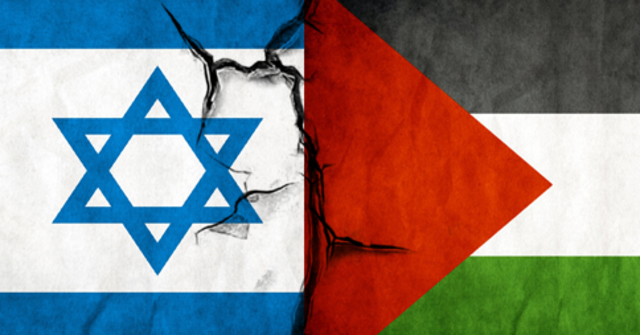
The Israeli-Palestinian conflict is centuries old and shows no signs of resolution from their causes, namely deeply held religious and political beliefs that pit one against the other. And then there’s the underlying fear and strong convictions that manifest as absolute certitude in things for which there can be no certainty. Of course, it is way more nuanced than that, actually to an extreme degree, but you get the gist.
Conflict resolution often requires creativity or in the very least expanding perspectives beyond mere cause and effect. In other words, introducing a new relationship that lacks all the baggage of the conflict itself. And an Israeli-Palestinian tech startup coalition may be part of this resolution, one that can demonstrate how, sharing a common interest and goal, can be a welcome detour.
As explained in the following excerpt originally published in NoCamels.com, Israel’s biggest problem in bolstering its highly touted proclamation as “StartupNation” is a labor shortage. The demand for coders that StartupNation has stimulated isn’t being met by Israeli’s workforce alone. StartupNation is a couple of thousand coders short of the demand it has created. Indeed, a good problem to have. The solution: Bring their neighbors into the mix. Palestinians currently are producing 3,000 coders per year from their own higher learning institutions.
And it’s no pipe dream. It’s happening right now…
Hire The Neighbors: Could Israeli-Palestinian Tech Initiatives Prove To Be A Win-Win Arrangement?
Israel’s tech talent shortages are a well-known problem, and the government and local businesses are constantly coming up with new initiatives to train programmers and coders to fill this need.
Israeli and Palestinian entrepreneurs believe they have a “win-win solution” for the growing mid-level tech talent crunch in Israel: Hire the neighbors.
“We need engineers for high-level programming and together with the Palestinians, we can build a large Silicon Valley for the Middle East,” David Slama, senior director for Palestinian Authority activities at Mellanox Technologies, tells NoCamels. “We have the relevant engineers, we have the relevant ideas and unfortunately, here in Israel, we’re missing talent [that the Palestinians have] on their side. Together we can build a bridge that develops great products for the whole world.”
Israel’s role as the “start-up nation” is world-renowned. But over the years, local companies have had to outsource to other countries due to a lack of engineers. Slama says Israeli companies should look no further than the Palestinian Authority areas, noting that some 3,000 Palestinian information and communication technology graduates enter the market each year.
“But about 75 percent of them cannot find relevant jobs,” he says, noting their forte in web UI (user interface) and high-level programming.
Mellanox and ASAL, a software and IT services outsourcing company based in Ramallah that employs some 250 technical experts around the West Bank and the Gaza Strip, began cooperating at the start of the decade.
The Israeli maker of high-speed computer networking products was among the first blue-and-white companies to outsource to Palestinian software developers in the West Bank and Gaza. Today, more than 120 Palestinian engineers and software developers work for Mellanox.
“We’re not taking jobs out of Israel. Israeli companies are already outsourcing to Eastern Europe, the Far East,” Murad Tahboub, CEO of ASAL Technologies, tells NoCamels. “Just one hour’s drive [from Tel Aviv], we have a pool of talented, available engineers. The demand here is much less than the supply. This could be utilized for the Israeli and international markets.”
Addressing the elephant in the room, namely the Israeli-Palestinian conflict, Tahboub says “it is not a social stigma to work with Israeli companies, on the contrary.”
“Political news is not only what the Palestinian people are all about. We want to have an export-oriented economy based on knowledge and innovation. This is our biggest vision. Innovation, technology, and entrepreneurship is the way for the future,” he explains.
Rawabi seeks high-tech fame
The latest Palestinian Mellanox employees are based out of the Rawabi Tech Hub, in Rawabi, the first planned city built for and by Palestinians in the West Bank, just 20 kilometers (12.5 miles) outside Jerusalem. So far, $1.4 billion has been invested in the city – by the developer and Palestinian businessman Bashar Masri, alongside Qatar investors.
The tech hub is a place of optimism. Here, Palestinian engineers and software developers from around the West Bank come to work in well-equipped, brand new surroundings in an open-air, upscale commercial and business mall known as the Q Center, reminiscent of Mamilla Mall in Jerusalem. Within the tech hub is CONNECT, an open-space collaborative workspace similar to WeWork.
“Rawabi is in the middle between Tel Aviv and [the Jordanian capital of] Amman. It could absolutely be a hub for innovation not just serving the Israeli and Palestinian markets, but serving the whole region,” says Tahboub.

By Diane Israel.
In certain areas, and vast swaths of some of them, i.e., the African continent, an estimated thirty to fifty percent of call corn harvest never make it to market. Not because of theft or corruption, but rather due to rodent infestation and inadequate sanitization in general.
Another Israeli company has figured out what to do with aging dialyzers, those devices used as artificial kidneys during patient dialysis. Turns out they work quite well as water filtration systems too. The remainder of this article was originally published in Israel30c.com.
Water security
Caesarea‐based NUFiltration helped solve the problem of what to do with some of the 125 million dialyzers (artificial kidneys used in dialysis) discarded annually worldwide: They sanitize and repurpose these sophisticated filters as water-purification devices for developing countries.
Inside the NUF machines containing four to 640 dialyzers, a single dialyzer can purify 50 to 200 liters of water per hour. “A system with eight dialyzers that costs one‐third of an equivalent, leading filtration system can produce eight liters of water per minute. This is easily enough to supply all of the daily water needs to 200 to 300 people in Africa — in one hour,” writes Wanetick.
The water purifiers are operated with hand pumps or solar power, requiring no chemicals and little maintenance, as their membranes are self‐cleaning. NUF systems are currently operating in Ecuador, Colombia, Peru, Fiji Islands, Cambodia, Vietnam, Ethiopia, Ghana, Kenya, Tanzania and Nigeria.
Food security
In Africa, a staggering 30 to 50 percent of post‐harvest corn (maize) fails to reach the market. A lot of that loss is due to rodent, fungus or aflatoxin infestation that happens when the grain is being dried and stored.
Tel Aviv‐based Amaizz resolves this problem with solar- or electric-powered modular drying, disinfection and storage units lined with thermoplastic and capped with anti‐algae meshes. The units’ unique ventilation system balances the humidity, precipitation and temperature.
Amaizz started sales with a unit in Senegal and is developing an add‐on disinfection system as well as a heating system that will be targeted to corn farmers in Latin America and Eastern Europe. The system also could be modified to deal with crops such as wheat, sesame, sorghum, rice, and coffee.
Diane Israel is a Chicago native and long-time supporter and advocate of the American Israel Public Affairs Committee (AIPAC). She is also famous for her culinary recipes. Diane can be reached at Diane@IsraelOnIsrael.com

As cyber attacks have become a daily reality, what many of us don’t fully appreciate is that the Internet is not just one vast interconnection of computers, smartphones, and tablets. Today, a plethora of “things” contain small chips, processors, sensors, and beacons that collect and transmit data analytics, and in some cases, diagnostic information, to a central server. These servers commonly reside in a public or private cloud, and the endpoints from which this data is being collected is becoming known as “Edge Technology” for its ability to invoke bidirectional communications, often vital ones, from the periphery of the Internet’s reach.
These endpoints comprise what now commonly termed the “Internet of Things” (IoT). This means common commodities such as cars, cows, shipping vessels (and their cargo), your dog or cat (through computer chip) are now or will be soon part of the IoT ecosystem. The rest of this article addresses how security can be enabled to protect your automobile (now that it’s literally part of the Internet) from cyber attacks.
This article was originally published on Israel21C.
GuardKnox of Ramla has a Communication Lockdown product that prevents any app, patch or upgrades from making contact with a connected vehicle unless it was specifically sanctioned by the automaker. The device protects vehicles from cyber attacks even when traveling in areas lacking communications signals.
“Suppose an automaker sets the upper range of a particular car’s speed signal at 120 miles per hour. Separately, suppose that the activation of automatic braking requires agreement from two independent sensors. No matter which access points hackers use to try to manipulate the car’s speed or braking protocols, GuardKnox blocks any instructions that are not sanctioned by the car manufacturer,” writes Wanetick.
The Eyes‐On system from Foresight Automotive in Ness Ziona uses stereovision cameras to capture a range of data about objects in the path of the car that pose a potential hazard and warns drivers visually or audibly about these objects.
Foresight has demonstrated in hundreds of tests that at medium distances of 20 to 30 meters, Eyes‐On can determine the distance to the object with an accuracy of 20 to 30 centimeters. The cameras capture between 30 and 45 images per second and achieve near 100% accuracy beginning with the first frame.

Proactive pruning of treetops prevents fires from spreading.
When we think about urban fires, an electrical device malfunction, or a poorly maintained old water heater, or even a lightning strike fill our imaginations as common causes. Plain enough. All of these causes are quite real. Yet unlike forest fires where we understand the way in which flames hop from one tree to another, sometimes even across entire roads, the same situation does occur in urban communities. After all, plenty of trees adorn our neighborhoods. So common are they, and other botanical aesthetics, that we don’t necessarily see the hazards, and part of this disconnect is the way in which urban fires are covered by the news media.
Diane Israel is a Chicago native and long-time supporter and advocate of the American Israel Public Affairs Committee (AIPAC). She is also famous for her culinary recipes. Diane can be reached at Diane@IsraelOnIsrael.com
Diane Israel is a Chicago native and long-time supporter and advocate of the American Israel Public Affairs Committee (AIPAC). She is also famous for her culinary recipes. Diane can be reached at Diane@IsraelOnIsrael.com
The focus tends to be on mortal dangers, not technical causes, unlike forest fires which tend to hone in on weather conditions, attempts and degrees of containment, and the number of acres currently scorched.
Fighting Treetop Fire of Jerusalem is developing infrared optical device technology for pruning the tiptop of trees to stop the unfold of active forest fires.
“Fires occurring on the tiptop of trees are often fifty times hotter, and move abundant quicker, than fires on the bottom,” saysWanetick.
Firefighters are ready to use FTF lasers to trim leaves off high branches simply by scanning the lasers across treetops from as secluded joined metric linear unit, as well as from helicopters over troublesome terrains and in windy conditions. Salamandra Zone, another Jerusalem firm, developed a technology enabling people to use elevators to escape high‐rise fires. Ordinarily, elevators square measure avoided just in case of the fireplace as a result of they’re not protected against flames, extreme heat and deadly gases.
https://youtu.be/jHNULh0KmKU
Salamandra Zone’s B‐Air E unit, placed on prime of elevator cabs, converts deadly gases into the breathable air in nanoseconds. Sensors in B-Air E confirm the kinds, concentrations, and blend of chemicals that ought to be free to convert the smoke to air reckoning on that materials square measure burning. The pressure of the refined, cooled air being pushed into the elevator cab prevents smoke from coming into once the elevator is moving or once its doors open. For value-added safety, the units contain an additional battery, pump, and detector. Backup electricity will operate it for a minimum of 3 hours.

By Diane Israel
Israeli study shows ‘natural killer cells’ turn out useful proteins within the female internal reproductive organ and retains memory for higher supporting subsequent maternity
Women WHO have had over one kid grasp that every subsequent maternity tends to be easier than the primary. however physicians and scientists ne’er knew why. Now, Israeli researchers at Hadassah Hebrew University center in the capital of Israel might have cracked this long-perplexing vaginal birth code. The answer plays out sort of a detective adventure story, with twists associate degreed turns and a surprising role reversal wherever the someone goes sensible and saves the day.
Even the name of the key biology concerned supports the adventure story motif: the researchers, LED by academic. Simcha Yagel, head of OB/GYN at Hadassah, are learning “natural killer cells.”
Part of the body’s system, natural killer cells get their swashbuckling name from their ability to wipe out tumors and pathogen-infected cells. These same natural killer cells are swarming within the human epithelial tissue – the liner of the female internal reproductive organ that forms the maternal a part of the placenta throughout maternity.
Natural killer cells facilitate defend the embryo and guarantee its development, though they can also cause issues and are connected in previous analysis with perennial miscarriage.
That’s as a result of “a craniate is actually a parasite or a growth,” Yagel tells ISRAEL21c. “It’s invaded a mother’s tissue. It gets atomic number 8 and nutrients from the mother.”
Most of the time, the natural killer cells hew to their main immune operate. Still, Yagel notes that “70 % of the cells within the fetal-maternal interface ar natural killer cells. That’s an excessive amount of for simply immune protection.”
What else may these natural killer cells be doing? As Yagel and his team continuing their analysis, they found that, instead of kill, alleged natural killer cells truly improve the possibilities of a healthy kid “by manufacturing proteins that support the maternity.”
The mechanism is complicated, however, the result’s, “We shouldn’t decision them natural killer cells. we must always decision them ‘natural builder cells,’” Yagel says.
The most shocking twist: natural killer cells have memory.
This had already been shown in associate degree earlier study observing however these cells fight illness. maybe, once offensive the herpes virus, natural killer cells convalesce at their job the second and third time they encounter the virus. “Without memory, they [would] attack everything that appears foreign,” Yagel says.
Yagel and his team found that identical factor was happening together with his “natural builder” cells in pregnancies on the far side the primary one. particularly, they improved “placentation” – the formation or arrangement of the placenta.
“Our findings might give a proof on why complications of maternity are less frequent in recurrent pregnancies.”
that will facilitate justify why the frequency of developing toxemia, a condition marked by high vital sign and swelling within the feet, legs, and hands, which may end up from inadequate placentation, drops in subsequent pregnancies.
“The likelihood of getting severe {preeclampsia|pre-eclampsia|toxemia of maternity|toxaemia of pregnancy|toxemia|toxaemia} during a initial pregnancy is 2-3 % worldwide,” Yagel says. “Statistically, that’s tons. It is fatal for the craniate or causes medicine deficits. And it will do important damage to the mother.”
“Our findings might give a proof on why complications of maternity, particularly the ‘great obstetric syndromes’ [which embody intrauterine growth restriction and little birth size] … ar less frequent in recurrent pregnancies,” the researchers wrote in their paper, that was printed in might 2018 within the medical journal Immunity.
Screening take a look at may be developed
Yagel’s analysis fits into the realm of biology known as “epigenetics,” that studies the changes in associate degree organism caused by modification of organic phenomenon.
“We discovered a population [of natural killer cells] found in recurrent pregnancies that incorporates a distinctive transcriptome and epigenetic signature,” the researchers added. “We named these cells maternity Trained Decidual Natural Killer Cells.”
Yagel stresses that the analysis continues to be the early part. we have a tendency to don’t grasp nonetheless, maybe, a way to activate the pregnancy-enhancing operate of natural killer cells in initial pregnancies.
The ultimate goal “is to develop a take a look at to screen for risk factors,” Yagel tells ISRAEL21c. By understanding, however, natural killer cells work, “we will raise what’s missing in initial pregnancies and eventually offer some treatment.”
One chance the researchers suggest artificial growth or manipulation of natural killer cells throughout a woman’s oscillation before maternity. That’s doable as a result of natural killer cells with their “memory” operate accumulate in amenorrhea.
“The cells appear to be ‘waiting’ for subsequent maternity,” Yagel says.
Moriya Gamliel, WHO did most of the work for the present analysis as a part of her Ph.D. thesis and is that the lead author of the article in Immunity, holds out a tantalizing direction for future analysis.
“We can attempt to convert the precursors of those memory natural killer cells — that are found within the female internal reproductive organ between pregnancies — into absolutely purposeful ‘memory’ cells which will on paper be wont to treat cases with poor placenta development or maybe diseases outside of maternity,” Gamliel explains.
That said, “What we’ve done up to now isn’t comfortable to create industrial tests,” Yagel adds, and there’s way more work for Yagel, Gamliel and also the team to try and do.
The just-completed study took six years of careful work, together with analyzing tissue samples from over 450 pregnancies.
We asked Gamliel what she felt were the foremost shocking results of the analysis. “That this finding is freelance of epidemiologic information like maternal age or weeks of maternity,” she tells ISRAEL21c. “It doesn’t even need reaching point in previous pregnancies.”
As long because the maternity lasted through the primary trimester, “you still have these memory cells.”
Other team members within the project came from across departments at the Hebrew University, together with the inspiration Laboratories at the Lautenberg Centre for medicine and Cancer analysis, the Magda and Richard Hoffman Center for Human Placenta analysis, the Department of OB and gynecology, and also the Department of organic process Biology and Cancer analysis. extra analysis support was provided by the Department of genetic science and also the Department of medicine at the Chaim Azriel Weizmann Institute of Science in Rehovot.